
The Biological Reach of Poison
Silent SpringThis flow follows pesticide movement from application through ecosystems and into the human body.
increasing Bearing strength in each event
 decreasing
Bearing strength in each eventdecreasingA New Chemical Age
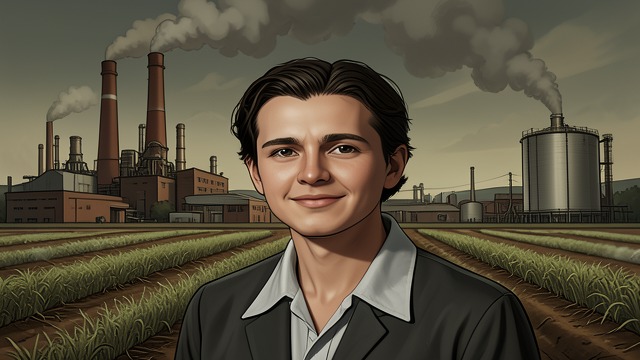
Synthetic Poisons Spread
New Products
The growth of synthetic pesticides followed wartime chemical research. Their production and uses expanded quickly, bringing compounds with unfamiliar properties into farms, forests, homes, and waterways.
A Changed Exposure
Carson contrasts these substances with naturally occurring materials to emphasize the mismatch between rapid industrial invention and slow biological adaptation. A growing stream of chemicals made exposure an ordinary condition.
Persistence in Soil
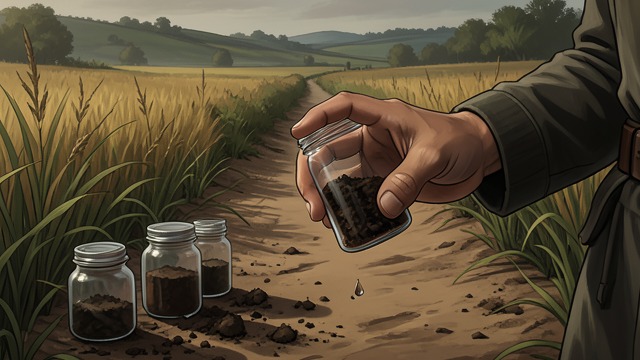
Residues That Remain
Chemical Persistence
Carson reports that some insecticides remain in soil for years, sometimes decades. Repeated applications add to what remains from earlier treatments rather than resetting the environment to its prior state.
Consequences Below Ground
Persistent residues can affect soil organisms and later crops. The soil becomes a long-term reservoir, linking a past spraying decision to future plants, animals, and food supplies.
Runoff Reaches Water
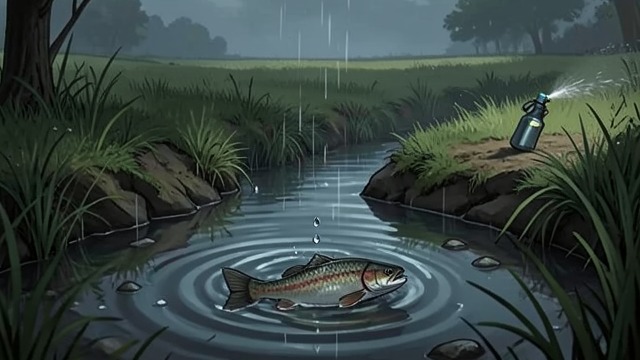
From Fields to Streams
The Journey Downstream
Rain carries chemicals from treated land into streams, rivers, reservoirs, and eventually the sea. Direct spraying adds another route by which waterways receive pesticide residues.
Purification’s Limits
Conventional treatment may fail to identify or remove persistent synthetic compounds. Contamination therefore becomes difficult to detect even where drinking-water systems appear to function normally.
Transfer Through Food
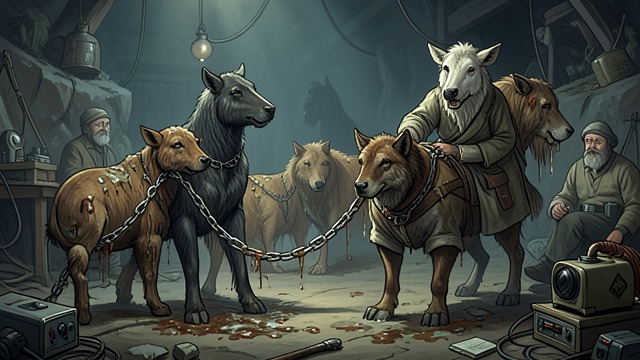
Small Doses Become Larger
Biological Storage
Some compounds accumulate in organisms rather than disappearing after entering water or food. Predators then consume contaminated prey, carrying residues onward through successive links.
A Wider Exposure
Carson uses this process to explain how a small environmental concentration can become a much larger burden in animals. Human beings are part of the same connected system, not observers outside it.
The Human Burden

Exposure Across a Lifetime
Many Routes
Food, household products, work, and contaminated surroundings create multiple routes of contact. A person may encounter several chemicals without being able to measure the combined dose.
The Book’s Warning
Carson argues that delayed effects make the danger especially hard to recognize. The environmental journey of a pesticide ends not at the field boundary but within living bodies and future generations.
After the Second World War
After repeated treatments, over several years
During rains following agricultural spraying
After residues enter a food chain
By the early 1960s
